
Tinubu Claims North is the Biggest Beneficiary of Economic Reforms
President Tinubu says Northern Nigeria benefits most from his economic reforms. Discover why Northern groups strongly disagree with this claim.



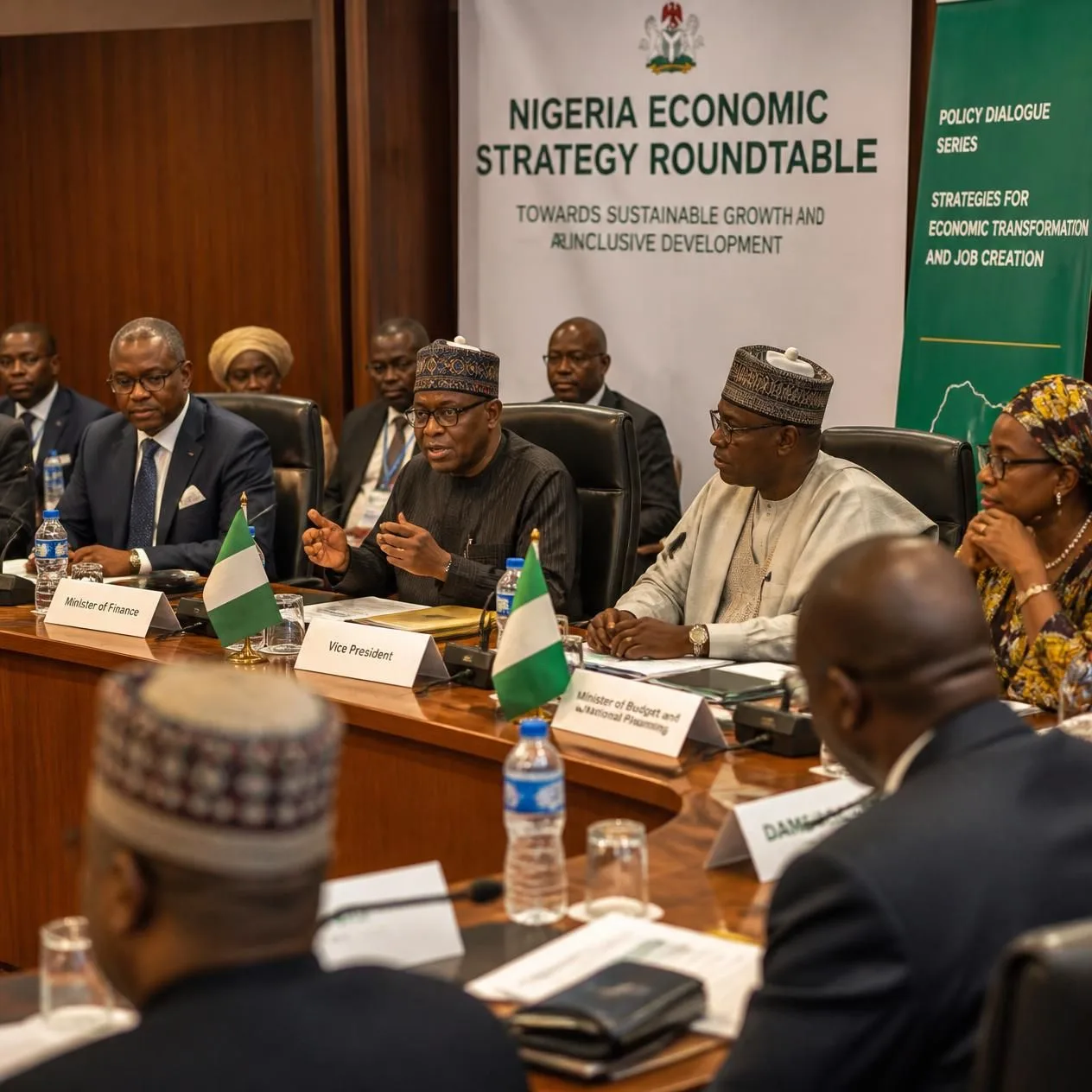
President Bola Tinubu has sparked a heated debate across Nigeria by claiming the Northern region is the biggest beneficiary of his administration’s economic reforms. The statement, delivered at the second APC Professionals Forum’s Policy Roundtable in Abuja, immediately drew sharp reactions from prominent Northern socio-cultural groups.
APC National Chairman Professor Nentawe Yilwatda delivered the President's message. The administration insists that removing the fuel subsidy and unifying exchange rates, despite the initial hardship, strategically positions the North for massive economic expansion.
Why the Government Thinks the North Wins
Tinubu’s argument hinges heavily on geography and infrastructure. Because the North borders several countries, the government believes the region will dominate cross-border commerce with Niger, Chad, Burkina Faso, and Cameroon.
To support this vision, the administration highlighted several ongoing mega-projects:
The Ajaokuta-Kaduna-Kano (AKK) gas pipeline
The Lagos-Abuja-Kaduna-Kano transport corridor
The proposed Sokoto-Badagry Super Highway
Beyond infrastructure, the administration pointed to improving national economic indicators. Gross external reserves reportedly hit $52.7 billion in August 2026, while the Q2 GDP growth reached 4.43 percent. These macroeconomic shifts - similar to the momentum seen when FTSE Russell reclassified Nigeria's market status - are meant to create a trickle-down effect for regional businesses. Social interventions like the Nigerian Education Loan Fund (NELFUND) and the CREDICORP credit initiative were also presented as proof of the government's commitment to ordinary citizens.
Northern Groups Push Back
The reaction from Northern leaders was swift and largely dismissive. The Arewa Consultative Forum (ACF) rejected the President's claims entirely. ACF spokesman Prof. Tukur Muhammad Baba described the government's stance as "surreal" and "cynical".
Critics argue that macroeconomic statistics mean little when daily survival is threatened. The ACF pointed out that deliberate food import policies and severe insecurity have practically brought Northern agriculture to its knees.
The Middle Belt Forum (MBF) echoed these sentiments. They argued that the sting of the fuel subsidy removal affects all Nigerians equally, making it unfair to frame the resulting policies as a regional victory.
Government's Claims | Northern Groups' Reality |
Improved cross-border trade opportunities with neighboring nations | Widespread insecurity makes safe travel and farming nearly impossible |
Heavy investment in transport corridors and gas pipelines | Immediate concerns remain high food prices and extreme poverty |
Macroeconomic recovery and rising GDP | Subsidy removal has spiked daily living costs for average households |
A Divided Opinion
Not everyone in the region disagrees with the President. Some Northern Christian leaders offered a different perspective. Reverend John Hayab of the Northern Christian Association stated that the region has indeed seen tangible progress. He specifically referenced ongoing infrastructure projects in Southern Kaduna as evidence that the administration's reforms are bearing fruit.
While Nigerian stocks gain trillions from banking and oil rebounds, the core issue for Northern residents remains practical. The political success of Tinubu's reforms won't be judged by high-level policy roundtables. As the country edges closer to the 2027 general elections, voters will measure these claims against their ability to farm safely, travel securely, and feed their families.
Comments (0)
Keep exploring
Related posts
 Politics
Osun State Governorship Election: 2026 Full Overview
 Politics
Tinubu Appoints New Head of Civil Service
 Politics
Tinubu Appoints Yari as Campaign DG, Enitan as Civil Service Head
 Politics