How to Buy Dangote Refinery IPO Shares: Step-by-Step (2026)
Learn exactly how to buy Dangote Refinery IPO shares. A step-by-step guide covering prices, deadlines, CSCS setup, and diaspora investment routes for 2026.




The Dangote Refinery IPO lets public investors buy shares in Africa's largest petroleum refinery. Shares are priced at ₦525 each, with a minimum investment of 10 shares (₦5,250). The subscription window runs from September 14 to October 13, 2026. You can apply through participating Nigerian brokers, commercial banks, or verified digital investment platforms.
Quick Facts: Dangote Refinery IPO
Feature | Details |
|---|---|
Share Price | ₦525 per share |
Minimum Investment | 10 shares (₦5,250) |
Offer Window | September 14 – October 13, 2026 |
Expected Listing | Late 2026 (Subject to SEC clearance) |
Target Raise | ₦2.15 trillion (4.1 billion shares) |
Last updated: September 30, 2026. Dates and terms are subject to change based on regulatory approvals and official prospectus updates.
Understanding the 2026 Dangote Refinery Public Offer
Before putting your money on the table, you need to understand exactly what you are buying. The offer gives you direct equity in Dangote Petroleum Refinery and Petrochemicals FZE. This is a completely separate entity from Dangote Cement or Dangote Sugar. Owning shares in other Dangote companies does not grant you ownership in the refinery.
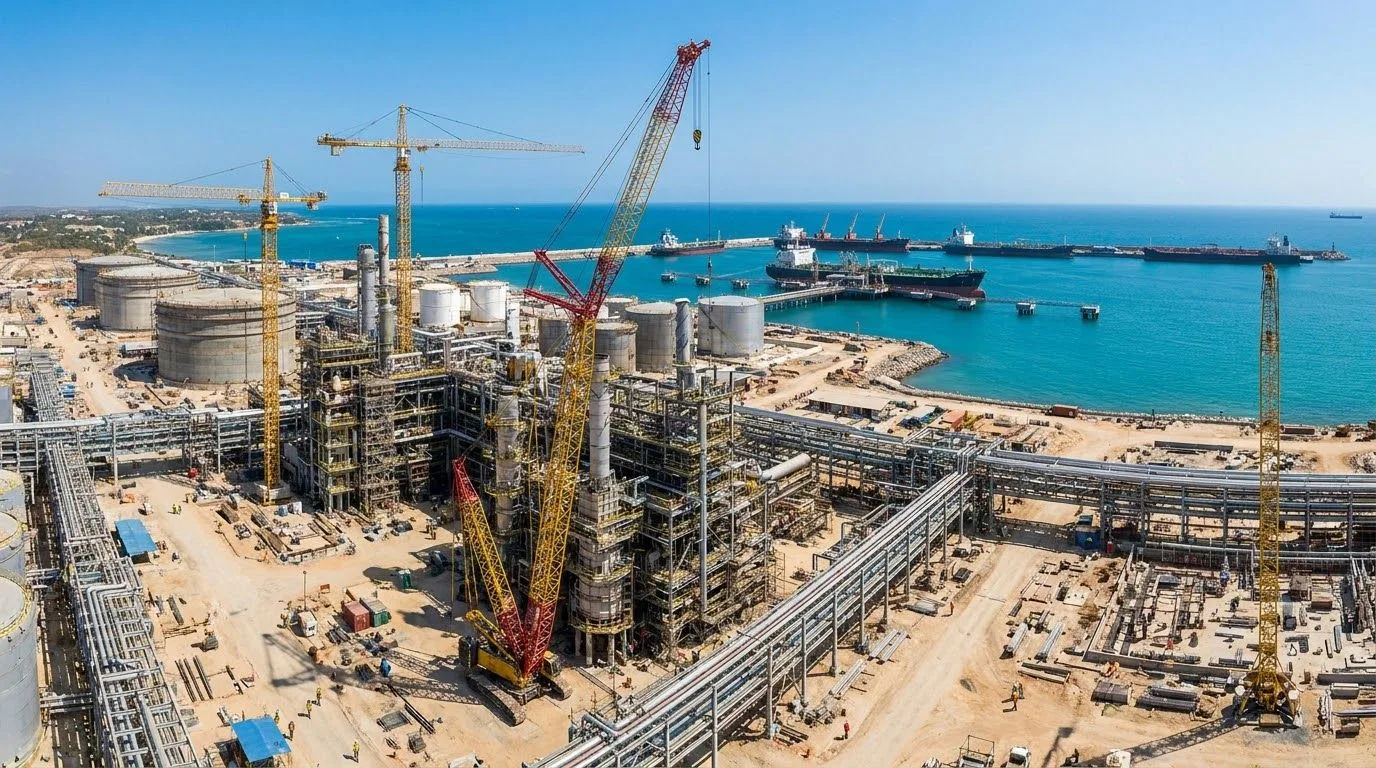
The numbers behind this initial public offering are massive. The company is putting 4.1 billion ordinary shares on the market. At ₦525 per share, this values the entire public raise at roughly ₦2.15 trillion, or around $1.5 billion. Following a highly anticipated build-up, the Dangote Refinery IPO officially opened on September 14, 2026.
The refinery achieved its rerated nameplate capacity of 700,000 barrels per day in June 2026. The audited half-year 2026 financials show strong profitability, reporting a profit after tax of $1.82 billion. The company plans to use the IPO proceeds to help fund a $14.3 billion expansion to double capacity to 1.4 million barrels per day by 2029.
Now let's walk through the exact process of acquiring these shares.
Step 1: Pick a Participating Broker or Platform
You cannot buy shares directly from the refinery. You must go through a licensed receiving agent. These include traditional stockbroking firms, commercial banks, and regulated digital investment platforms.
Traditional stockbrokers like Chapel Hill Denham, Stanbic IBTC Stockbrokers, and Meristem offer direct access. They have deep experience handling large public offers. If you plan to invest millions of Naira, a traditional broker provides dedicated account managers and high-priority processing.
Digital investment apps offer a more accessible route for retail investors. Platforms like Bamboo, Trove, and Chaka regularly participate in Nigerian Exchange (NGX) offerings. Check your preferred app to confirm they are an approved receiving agent for this specific IPO.
Do this early. Brokers often set their internal application deadlines a few days before the official October 13 close. They need that buffer to process paperwork and transfer funds to the receiving banks.
Step 2: Complete Your KYC (Know Your Customer)
Every investor in the Nigerian capital market needs a Central Securities Clearing System (CSCS) account. Think of the CSCS as a digital vault where your shares actually live. Your broker acts as the key to that vault, but the vault belongs to you.
If you already trade Nigerian stocks, you have a CSCS account. You just need your clearing house number (CHN) and CSCS account number.
If you are a new investor, your broker will open a CSCS account for you. To do this, you must complete the KYC process. You will need:
Your Bank Verification Number (BVN)
Your National Identification Number (NIN)
A valid government-issued ID (international passport, driver's license, or voter's card)
A recent utility bill for proof of address
Passport photographs (if applying physically)
Digital platforms usually handle KYC entirely within their apps. Traditional brokers might require you to fill out physical forms or use their web portals. Do not delay this step. The CSCS account creation process can take 24 to 48 hours during periods of high market demand.
Step 3: Fund Your Investment Account
Once your account is active, you need to fund it. The minimum investment is ₦5,250 for 10 shares. You can buy more in multiples of 10.
Calculate your total cost beforehand. Multiply the number of shares you want by ₦525. Then, add a little extra to cover your broker's processing fees, statutory charges, and potential transfer levies.
Transfer the exact amount from your personal bank account to your brokerage wallet. Do not use a third-party bank account. The names on your bank account, your brokerage account, and your CSCS account must match perfectly. Any mismatch will cause the receiving bank to reject your application.
Be mindful of bank transfer limits. If you plan to buy ₦10 million worth of shares but your daily bank app limit is ₦2 million, you will need five days to fund the account. Start funding early to avoid missing the broker's cut-off date.
Step 4: Submit Your Application
With your account funded, you can submit the actual IPO application.
If you are using a digital platform, navigate to the IPO or primary market section of the app. Select the Dangote Refinery IPO. Enter the number of shares you want to buy. The app will calculate the total cost. Review the terms, tick the consent boxes, and hit submit. The funds will be deducted from your wallet immediately.
If you are using a traditional broker or a commercial bank, you will fill out a physical or digital placement form. You must specify the number of shares and the total value. Sign the form and submit it alongside proof of your bank transfer.
A special retail incentive applies here. The prospectus states that retail investors who hold at least 10 shares for 12 months will receive one bonus share. Holding for 24 months earns a second bonus share. Keep this in mind when deciding your investment strategy.
Step 5: Keep Your Transaction Receipt
Never close out an application without saving proof. Take a screenshot of the success page on your digital app. Download the transaction receipt. If you applied physically, ensure the receiving agent stamps your copy of the form and issues a formal receipt.
High-profile IPOs generate massive transaction volumes. Network timeouts and API failures happen. If your funds leave your bank but your broker's system fails to log the application, your receipt is your only lifeline. Store it safely until you see the shares credited to your CSCS account.
Step 6: Await Allotment and Listing
October 13 is the closing date, but you won't get your shares on October 14. The capital market follows a strict post-offer timeline.
First, the receiving agents consolidate all applications and send the funds to the designated receiving banks. The registrars then process everything and eliminate invalid applications.
Next, the issuer and their financial advisers determine the basis of allotment. This simply means deciding who gets what. The target raise is ₦2.15 trillion. If investors submit applications worth ₦3 trillion, the offer is oversubscribed.
When an offer is oversubscribed, you rarely get all the shares you asked for. The issuer will apply a scale-back formula. You might apply for 1,000 shares but only receive 600.
The Securities and Exchange Commission (SEC) must approve this allotment basis. Once approved, the registrars announce the results.
If you were scaled back, the money for the unallocated shares is refunded to your bank account. Do not panic if you see a partial refund weeks after the offer closes. It just means the demand was higher than the supply.
Finally, the approved shares are credited directly to your CSCS account. Shortly after that, the Nigerian Exchange (NGX) publishes a listing notice. The shares then begin trading on the secondary market. At this point, the market dictates the price. It could trade higher or lower than the ₦525 offer price.
The Diaspora Route: Investing from Outside Nigeria
Many Nigerians living abroad want to participate in this landmark transaction. Historically, investing in the NGX from outside the country was a frustrating maze of BVN requirements and local banking mandates.
Things have improved for the 2026 offer. Several platforms now cater specifically to diaspora and foreign investors. Platforms like MyStocks and Daba allow non-residents to participate without needing a local Nigerian bank account or a pre-existing CSCS number.
These platforms often pool investments through a nominee structure. You create an account on their platform, complete international KYC protocols (like uploading a foreign passport), and fund your wallet in US Dollars, British Pounds, or Euros.
The platform handles the currency conversion. They consolidate the funds and apply for the shares on behalf of their users.
Be aware of the exchange rate dynamics. Your investment is priced in Naira (₦525 per share). If you fund your account with Dollars, the platform converts it using their prevailing exchange rate. Even as the Naira strengthens in specific liquidity windows, retail conversion rates can vary. Check the exact dollar cost per share on your chosen platform before confirming the trade.
Also, keep in mind that the official prospectus sets the final eligibility rules. While these platforms facilitate access, you must ensure your jurisdiction allows you to participate in foreign unlisted or newly listing securities.
A Crucial Warning: Do Not Borrow to Invest
We need to talk about risk. The hype surrounding the Dangote Refinery is immense. It is a world-class facility that alters global energy flows. But a great company does not automatically guarantee a risk-free stock.
Never borrow money to buy IPO shares. Do not take out a bank loan. Do not use margin facilities. Do not borrow from friends.
Nigeria's interest rates are currently very high. If you borrow money at 30% interest to buy shares, the stock needs to appreciate by more than 30% just for you to break even.
Public markets are volatile. When the shares list on the NGX, early investors might decide to sell immediately to lock in quick profits. This initial dumping can push the share price below the ₦525 offer price in the short term.
If you used borrowed money, a price drop puts you in negative equity immediately. You will still owe the principal and the high interest, while your asset value shrinks.
Invest only what you can afford to lock away. The retail incentive of bonus shares for 12-month and 24-month holding periods shows that the company wants long-term investors. Approach this as a long-term play, not a quick flip.
Final Thoughts on the Offer
The Dangote Petroleum Refinery IPO is a massive milestone for the Nigerian capital market. It brings unprecedented liquidity and global attention to the NGX. Whether you apply through a traditional broker in Lagos or a digital app in London, the process demands attention to detail.
Double-check your BVN and CSCS details. Fund your account early. Secure your transaction receipt. The October 13 deadline is firm, but your personal deadline should be much earlier to avoid last-minute platform congestion.
Read the prospectus carefully. The document contains detailed financials, risk factors, and expansion plans. Make your investment decision based on those hard facts, not just market sentiment.
Comments (0)
Keep exploring
Related posts
 Business
Nigeria Shares Record ₦3.007 Trillion in July Federation Revenue
 Business
Turn Nigeria's Oil Reforms Into Bankable Projects Now
 Business
Tinubu's Offshore Oil Tax Incentives Spark $50B Rush
 Business