Aliko Dangote's $16 Billion Lamu Refinery: Complete Details
Aliko Dangote has broken ground on a $16 billion, 700,000 bpd oil refinery in Lamu, Kenya. Discover the timeline, ownership structure, and regional impact.



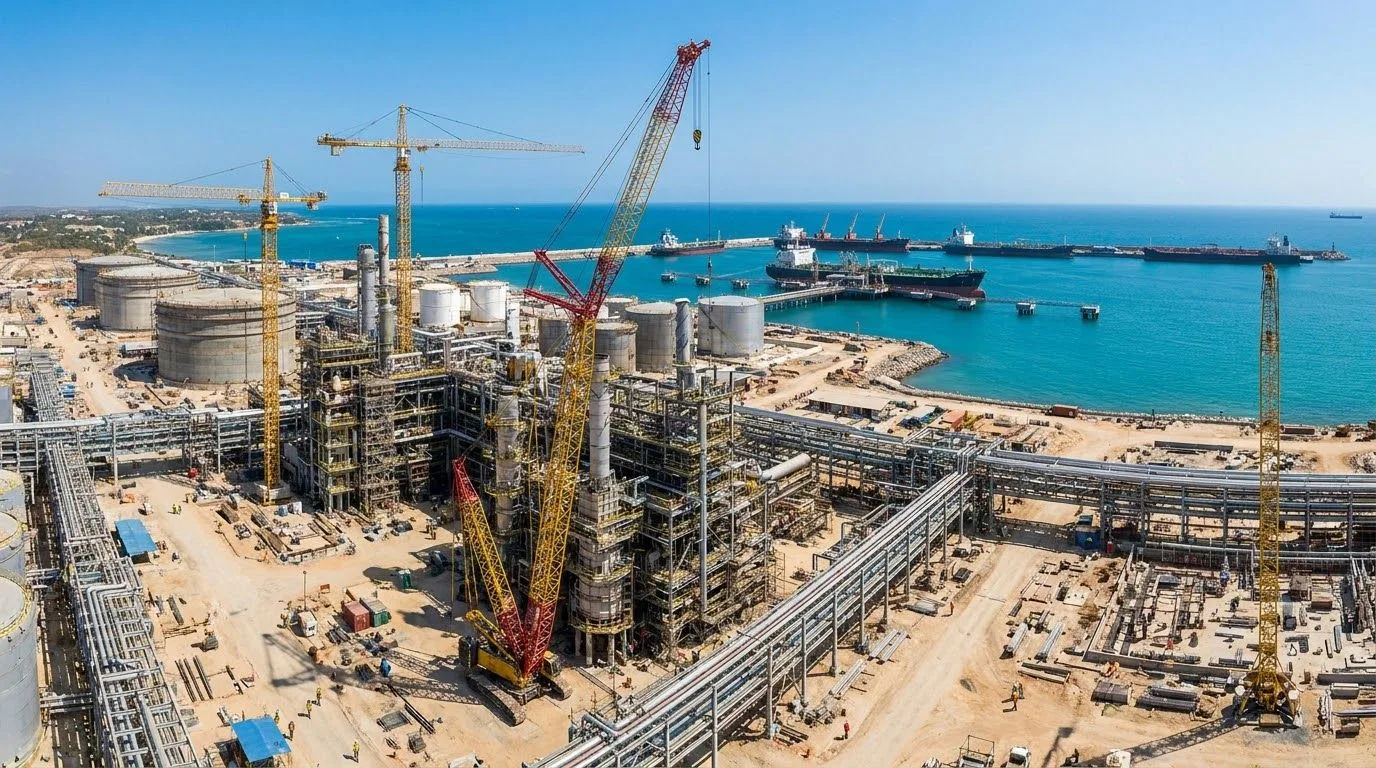
Nigerian billionaire Aliko Dangote is officially expanding his energy empire far beyond West Africa. On September 30, 2026, he broke ground on a massive petroleum refinery in Lamu, Kenya. This $16 billion project aims to completely rewrite East Africa's energy narrative.
Several African heads of state travelled to the coastal town of Makowe to mark the historic ceremony. Guests included Kenya's President William Ruto, Uganda's Yoweri Museveni, and Ethiopia's Prime Minister Abiy Ahmed. Located within the LAPSSET Special Economic Zone in Magogoni, this facility represents the Dangote Group's largest refining investment outside Nigeria.
Incredible Capacity and Output
The new Lamu oil refinery will process 700,000 barrels of crude oil every single day. That precisely matches the massive capacity of his flagship facility in Lagos. Once fully operational, the plant will produce over 100 million litres of petrol, diesel, and aviation fuel daily.
East African nations currently import almost all their refined petroleum products. This new facility will shatter that dependence. Planners intend to source raw crude oil from regional neighbours like Uganda, South Sudan, and the Democratic Republic of Congo.
The refinery will then pump finished petroleum products to eight different countries, including Tanzania, Rwanda, and Burundi. It completely changes the economics of transport and manufacturing in the region. Countries will no longer have to ship unrefined crude out, just to buy refined fuel back at a steep premium.
The 40-Month Race to Completion
Dangote has set an incredibly aggressive timeline for this project. He pledged to finish building the Sh2.2 trillion refinery within just 40 months. If construction stays on schedule, the plant will become fully operational by early 2030.
Heavy equipment has already started arriving at the Kenyan coast. Days before the groundbreaking, the MV Da Yang docked at the Port of Lamu carrying nearly 3,000 metric tonnes of construction machinery. The Kenyan government expects this mega-project to create roughly 60,000 jobs and spark rapid industrialisation along the coastline.
A Strategic Ownership Structure
Unlike the fully privately-owned Lagos facility, the Lamu refinery features strong state backing. Several East African governments plan to take equity stakes in the project. This secures their national energy interests while providing the necessary political support for such a massive cross-border venture.
Shareholder | Tentative Ownership Percentage |
|---|---|
Dangote Group | 70% |
Government of Kenya | 10% |
Government of Ethiopia | 10% |
Government of Rwanda | 10% |
This shared ownership model ensures deep regional buy-in. It also guarantees massive captive markets for the refinery's daily fuel output.
Why Did Dangote Choose Lamu?
Dangote didn't pick Lamu immediately. Initial talks focused heavily on the Tanzanian port city of Tanga. Later, discussions shifted to Mombasa because of its established commercial infrastructure.
Lamu eventually won the bid for very specific strategic reasons. The town offers a naturally deep port, which is absolutely necessary for docking massive crude oil carriers. More importantly, it sits exactly at the start of the Lamu Port-South Sudan-Ethiopia-Transport (LAPSSET) corridor.
This developing transport network makes moving finished petroleum products across land borders much cheaper. Tankers can load directly at the port, while trucks and future pipelines will push fuel straight into landlocked countries like Ethiopia and South Sudan.
Fueling Broader Energy Ambitions
This East African expansion aligns perfectly with Dangote's broader corporate strategy. He aims to hit $100 billion in revenue for his conglomerate by the year 2030. The Lamu project represents a massive leap toward that ambitious target.
Back in Nigeria, retail and institutional investors are watching his energy moves closely. With the Dangote Refinery IPO recently generating massive headlines, public interest in his ventures has never been higher. The historic Nigerian offering seeks to raise massive capital, and retail investors are already studying guides on how to buy Dangote Refinery IPO shares. His ability to execute this new $16 billion Kenyan project will undoubtedly boost investor confidence even further.
The Lamu oil refinery is far more than just an industrial plant. It's a strategic pivot for all of East Africa. By refining crude oil locally, the region can stabilize volatile pump prices and keep foreign exchange reserves at home. It finally gives East Africa real control over its energy future.
Comments (0)
Keep exploring
Related posts
 Business
Nigeria Shares Record ₦3.007 Trillion in July Federation Revenue
 Business
Turn Nigeria's Oil Reforms Into Bankable Projects Now
 Business
Tinubu's Offshore Oil Tax Incentives Spark $50B Rush
 Business