FRSC Fake Traffic Fine Texts: How to Spot the Scam
Nigerian drivers are being targeted by fake FRSC traffic fine text messages. Learn how to identify this phishing scam and protect your personal data today.



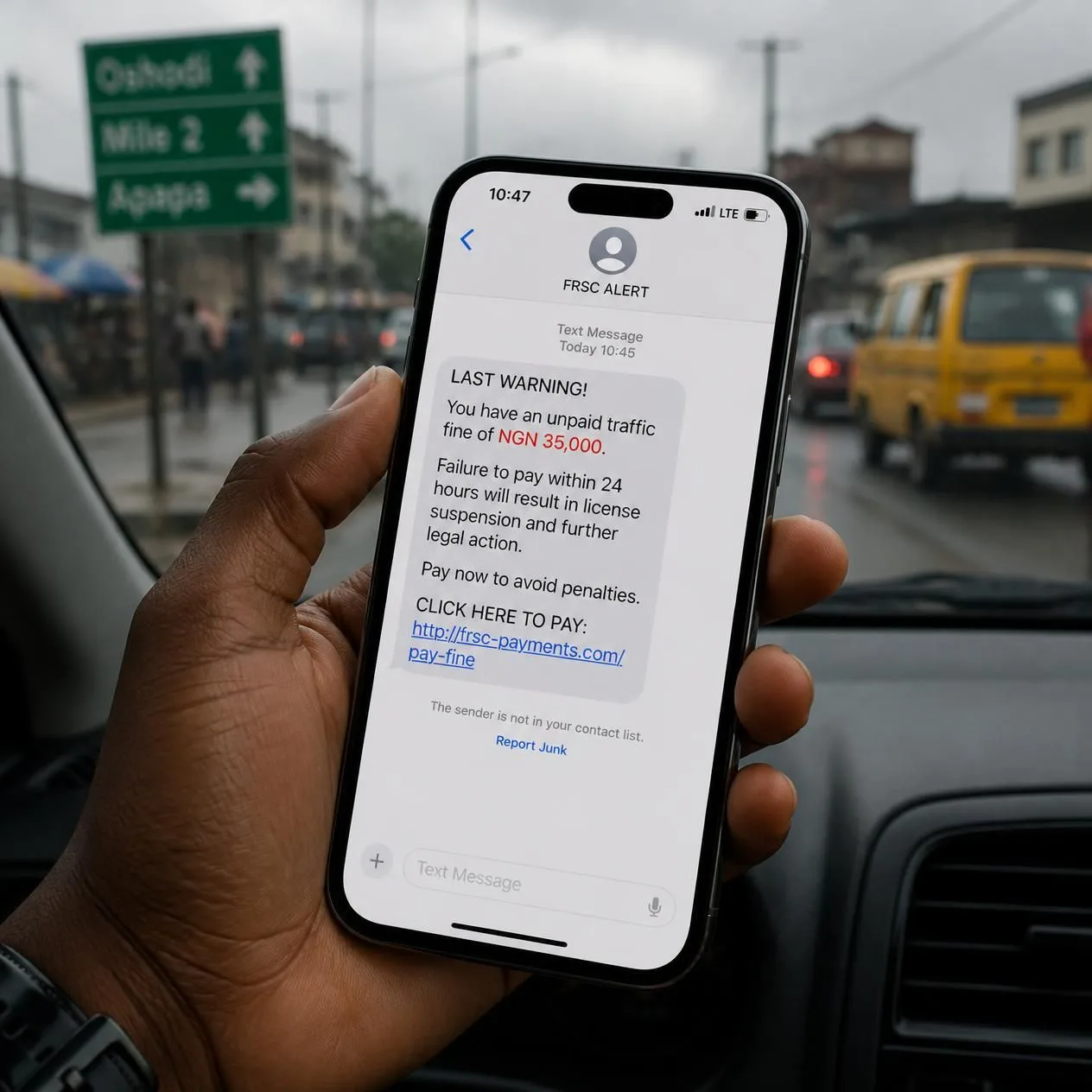
Nigerian drivers are waking up to panic-inducing text messages. Your phone buzzes. You look down and see an urgent SMS claiming you have a brand new "road traffic offence record". The message demands immediate action and provides a link to review your fine.
Don't click it.
The Federal Road Safety Corps (FRSC) just issued a nationwide alert regarding a massive phishing scam. Cybercriminals are aggressively targeting motorists across the country with unsolicited text messages. These texts use the official FRSC name and logo to scare drivers into making rash decisions.
Nigerian drivers already navigate a highly stressful environment. Between endless gridlock, fuel costs, and major shifts in the transport sector like Uber's recent regulatory exit from Nigeria, receiving a fake traffic fine is the last thing anyone needs. Scammers know this anxiety works perfectly to their advantage.
Here is exactly how the scam operates. The fraudulent text creates a false sense of urgency. It pushes you to a deceptive website designed to perfectly mimic the official FRSC digital portal. One of the primary malicious links currently circulating is "frscgov.top/ng".
The FRSC explicitly disowned this domain. The official website for the agency remains www.frsc.gov.ng.
According to a recent report by Punch Newspaper, FRSC Public Education Officer Osondu Ohaeri explained the true motive behind these texts. The criminals aren't actually looking for a quick fine payment. They want your entire digital identity. If you click the fake link, the site attempts to harvest your banking information, passwords, ATM card details, driver's licence data, and vehicle registration numbers.
Once they secure this data, they can easily wipe out your bank accounts or steal your identity.
Corps Marshal Shehu Mohammed directed his team to heavily sensitise the public. He launched a simple, effective campaign for anyone receiving these texts: "STOP. VERIFY. REPORT."
The agency strictly advises against engaging with the sender. Do not reply to the text. Do not click the link. Preserve the message as evidence and report it immediately. If you genuinely suspect you committed a traffic violation, you should verify it directly. You can simply call the official FRSC national toll-free line at 122.
Law enforcement agencies are currently working alongside cybersecurity experts to track down the syndicate behind these messages. The FRSC made it clear they will aggressively pursue action against anyone impersonating their personnel. We have recently seen Nigerian law enforcement step up operations against local criminal networks, successfully apprehending notorious groups like the Shilla Boys in Yola. They plan to bring that same energy to these digital fraudsters.
Protecting yourself requires basic digital hygiene. Never input sensitive financial data into a website you reached via a random text message link. Government agencies will never rush you into handing over your ATM pin to clear a sudden traffic violation. Stay vigilant and share this warning with your family WhatsApp groups before someone falls victim.
Comments (0)
Keep exploring
Related posts
 News
NYSC Releases Call-Up Numbers for Batch C: How to Check
 News
Killaboi Testifies on Girlfriend's Messages in Court
 News
Nigerians Face El Nino Heatwave with Jokes and Warnings
 News