
Lagos Rent Surge Leaves Families Scrambling for Homes
Lagos rent prices have surged by 200%, pushing families to the city's fringes. Discover what's driving this crisis and how tenants are surviving.



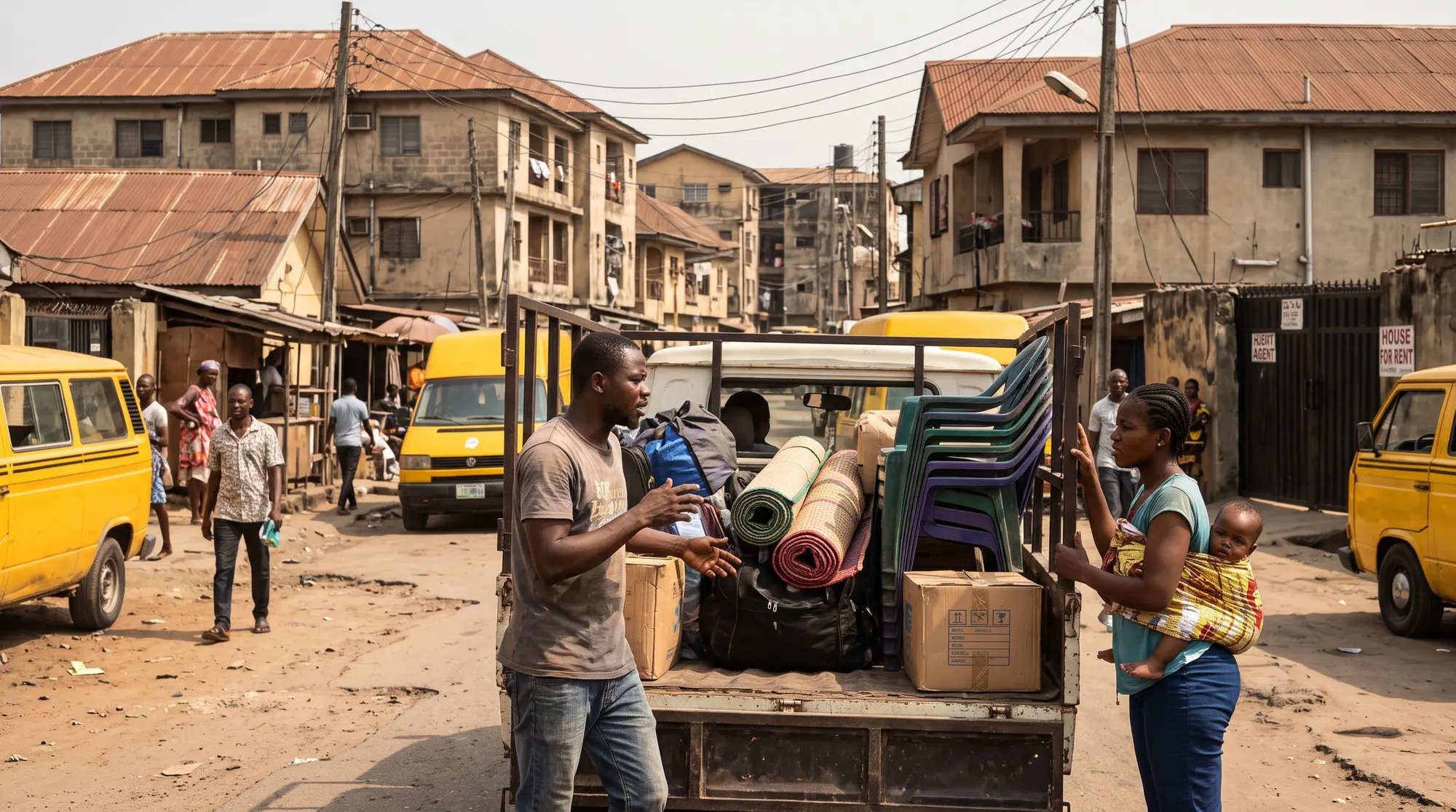
Getting a rent renewal notice in Lagos used to cause mild anxiety. Now, it triggers sheer panic. The Lagos rent surge has turned the city's housing market into a battleground. Families are frantically scrambling for affordable homes. Meanwhile, landlords are doubling or even tripling their asking prices overnight.
Let the numbers speak for themselves. Rental costs in key districts have jumped by up to 200% over the past two years.
Look at how average rents for standard apartments have shifted since 2020:
Neighborhood | 2020 Average Rent | 2026 Average Rent |
Yaba (2-Bedroom) | ₦1,000,000 | ₦3,000,000 |
Lekki Phase 1 (2-Bedroom) | ₦2,000,000 | ₦9,000,000 |
Surulere (2-Bedroom) | ₦1,500,000 | ₦5,000,000 |
Ikeja (Mini-flat) | ₦300,000 | ₦1,500,000 |
These figures only represent base rent. They completely exclude the dreaded agency, agreement, and caution fees. Those mandatory add-ons easily push your initial move-in cost up by another 30%. Lagos landlords famously demand at least one year of rent upfront. Some still boldly ask for two years. Raising ₦5 million in a single payment is an impossible task for most salary earners.
You can't blame landlords entirely. The math of building a house in Nigeria has fundamentally changed. Real estate developers rely heavily on imported materials. As the Naira dips in the parallel market, construction costs skyrocket.
Cement tells the whole story. A standard bag of cement cost roughly ₦3,000 in 2020. Today, that exact same bag sells for up to ₦15,000. Roofing sheets, plumbing materials, and electrical fittings followed the same brutal upward curve. Property owners argue they're simply trying to recover their investments.
Supply and demand also dictate these extreme prices. Lagos adds nearly 800,000 new residents every single year. Meanwhile, the real estate market delivers fewer than 50,000 new housing units annually. When demand crushes supply this heavily, property owners hold all the leverage. They dictate the terms. Tenants must pay up or pack up.
Many families choose to pack up. We're witnessing a massive migration from central Lagos to the city’s extreme fringes. Neighborhoods in Abule Egba, Ikorodu, and neighboring Ogun State communities are filling up fast.
But this forced relocation creates a new financial trap. Rent might look cheaper on the outskirts, but commuting eats up the savings. With petrol prices surging, spending four hours in traffic every day drains your wallet. Transport fares and vehicle maintenance quickly cancel out whatever you saved on cheaper housing. The physical toll of the daily commute also wrecks your health.
The definition of a standard apartment has also shifted. Basic features like running water, prepaid meters, and security are now marketed as premium luxury add-ons. A simple mini-flat in Ikeja commands a massive premium just because it has a solar inverter and a reliable borehole. Tenants pay heavily just to secure basic living conditions.
Moving isn't just about paying the new landlord. Relocating carries heavy hidden expenses. You have to hire a moving truck, which now costs a fortune due to high diesel prices. You might need to pay carpenters to dismantle and reassemble your furniture. Plumbers charge exorbitant fees just to connect your washing machine in the new space.
Then comes the issue of neighborhood integration. Families forced out of familiar zones must find new schools for their children. Sometimes, those new schools demand non-refundable admission fees. The financial bleeding doesn't stop on moving day. It bleeds into the first six months of living in the new environment.
According to the National Bureau of Statistics, inflation remains a stubborn driver of these cost-of-living spikes. Food and energy costs leave very little disposable income. When housing takes up 60% of a family's earnings, survival becomes the only goal. Industry reports from firms like Knight Frank confirm that residential rents continue climbing despite broader economic hardships.
Families are surviving by making tough compromises. People are downsizing to smaller units. Strangers are sharing apartments to split crushing bills. Some negotiate shorter lease terms to survive the immediate shock.
True relief requires aggressive policy intervention. The government needs to support the local manufacturing of building materials. We also need massive public housing projects targeted at the middle and lower classes. Until that happens, the Lagos real estate market remains a brutal survival of the fittest.
Comments (0)
Keep exploring
Related posts
 News
NYSC Releases Call-Up Numbers for Batch C: How to Check
 News
Killaboi Testifies on Girlfriend's Messages in Court
 News
Nigerians Face El Nino Heatwave with Jokes and Warnings
 News