
Terra Industries Raises $52M: Nigerian Defence-Tech Startup
Abuja-based defense startup Terra Industries closed a record $52 million seed round. Discover how they plan to secure the Global South.



African tech startups rarely raise $52 million. When they do, the money almost always flows into fintech, logistics, or e-commerce platforms. A hardware-focused defense startup pulling those numbers is entirely new territory.
Abuja-based Terra Industries has effectively rewritten the venture capital playbook for the continent. The company develops autonomous defense and security systems. Recently, they secured an additional $18 million in funding. This fresh capital pushes their total 2026 seed financing to a staggering $52 million. Terra itself confirms the $52 million financing via its official newsroom, marking a historic moment for African technology.
Let's unpack how a two-year-old company convinced Silicon Valley heavyweights to back an African defense contractor.
The Anatomy of a $52 Million Seed Round
This wasn't a single check written overnight. Terra structured its massive seed round across three strategic tranches in just eight months.
The momentum kicked off in January 2026. The startup announced an initial $11.75 million raise led by 8VC. For context, 8VC is the venture firm co-founded by Joe Lonsdale, who also helped launch the American data intelligence giant Palantir. Landing 8VC gave Terra immediate credibility in the highly secretive defense-tech space. A month later, Lux Capital stepped in to lead a massive $22 million extension.
The final $18 million tranche closed in mid-August. Existing backers like Silent Ventures, Nova Global, Belief Capital, and SV Angel doubled down on their initial investments. New investors, including Norleo Space Investments and angel investor Grant Gordon, also joined the cap table.
According to TechCrunch's coverage of the $52M round, this aggressive fundraising pace is exceedingly rare. Closing three tranches before the end of the year shows immense investor appetite. It proves that venture capital sees defense technology as a viable, high-growth sector well outside traditional Western markets.
Moving Beyond Fintech: What Terra Actually Builds
Founders Nathan Nwachuku and Maxwell Maduka launched Terra Industries in 2024. They aren't building mobile apps or another payment gateway. They manufacture serious hardware designed for hostile, unpredictable environments.
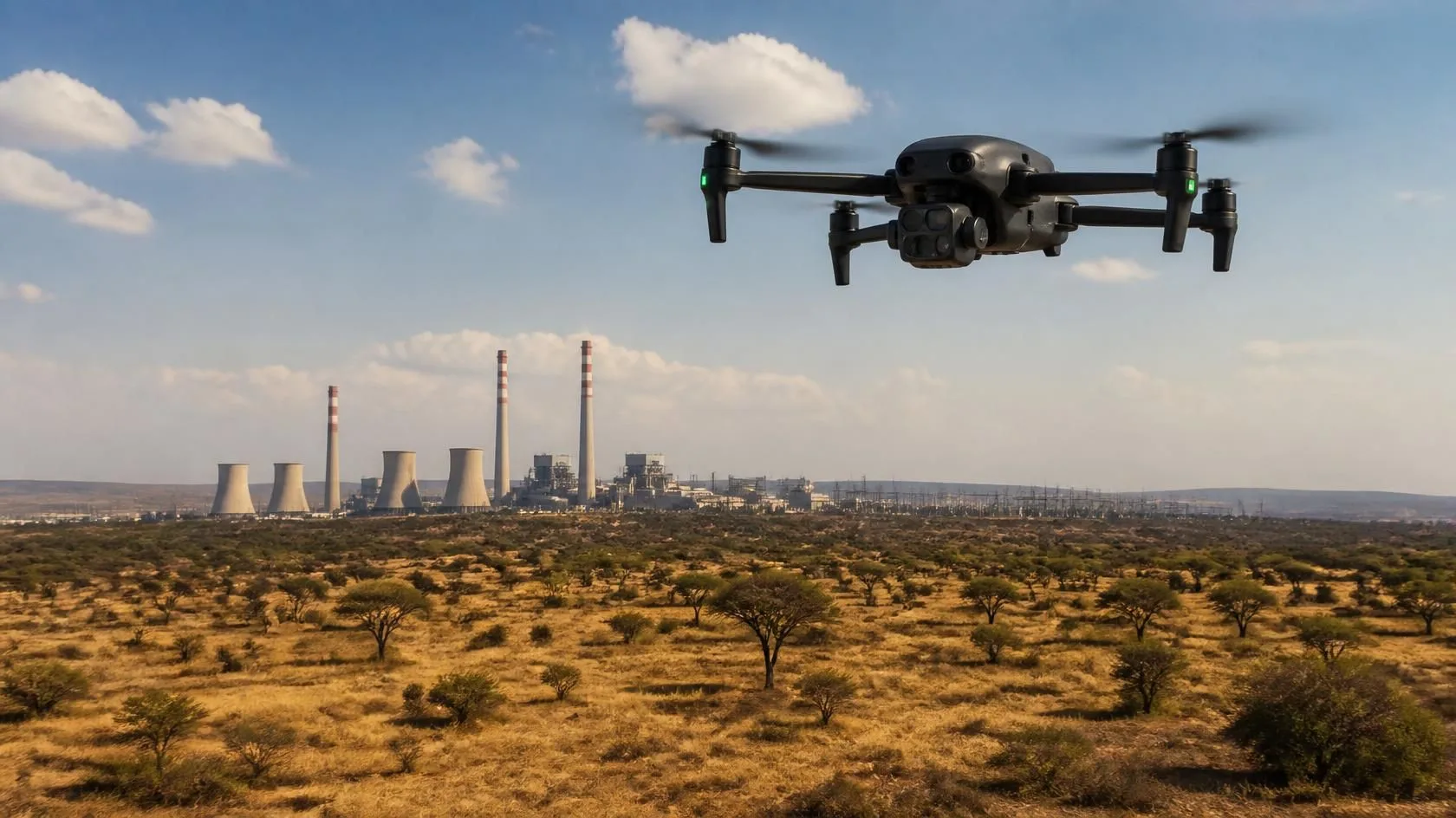
Their product portfolio includes long-range autonomous drones, rapid interceptor drones, unmanned ground vehicles, and automated sentry towers. These physical machines patrol borders, monitor vast terrains, and respond to kinetic threats automatically.
Hardware, however, is only half the equation. Terra's real competitive edge is ArtemisOS. This proprietary operating system serves as the brain connecting all their physical assets. It handles real-time threat detection, processes raw sensor telemetry, and executes autonomous mission planning. If a sentry tower spots an anomaly, ArtemisOS can instantly coordinate a drone swarm response without waiting for human intervention.
The practical use cases are highly relevant. Across the region, critical infrastructure faces persistent threats from organized crime, illegal mining operations, and terrorism. Local security forces regularly battle sophisticated syndicates, highlighted by incidents like the recent arrest of a female gunrunner in Plateau State. Relying purely on human patrols to secure remote power plants and vast borders is expensive and inherently dangerous. Terra claims its technology already protects approximately $11 billion worth of national assets across multiple African countries.
Designing Specifically for the Global South
If you examine major Western defense tech firms like Anduril in the US or Helsing in Europe, their systems cater heavily to NATO requirements. They build for the specific realities of high-intensity conflicts like Ukraine.
Terra took a deliberately different path. The company explicitly builds for the Global South.
Operating conditions in Africa, Latin America, and South Asia present unique challenges. Severe dust, extreme heat, and patchy network connectivity quickly degrade equipment designed for European winters. Terra engineers its hardware specifically to survive these harsh local realities. TechRadar highlights Terra's strategy of taking on US and European giants by cornering these vast, underserved markets.
Data sovereignty is another massive selling point. Governments are increasingly hesitant to buy surveillance technology from foreign superpowers. They fear hidden backdoors and compromised data. Terra guarantees that client data stays under local jurisdiction. This philosophy aligns perfectly with broader national goals, such as the Nigeria Sovereign Cloud Initiative, which forces critical data to remain securely onshore.
Scaling Local Manufacturing Capabilities
You can't claim true sovereignty if you import all your drones. Terra understands this and is heavily investing in local production infrastructure.
Currently, they operate Pax-1, a 15,000-square-foot manufacturing facility located in Abuja. But their industrial ambitions go much further. They are actively preparing to launch a second facility, Pax-2, in Ghana by the fourth quarter of 2026.
At 34,000 square feet, Pax-2 will become the largest drone manufacturing factory in Africa once it goes fully online. By 2028, Terra expects this facility to reach an annual production capacity of 50,000 aerial units. This sheer scale of industrial ambition is exactly what SiliconAngle noted about Terra's latest $52M round, emphasizing a crucial shift toward localized defense production.
Building complex defense hardware locally solves massive supply chain vulnerabilities. It reduces wait times for critical spare parts and creates highly skilled engineering jobs right on the continent.
The London Expansion and the Global Talent War
Despite its strong African roots, Terra needs a global footprint to secure massive, cross-border government contracts. A significant portion of the $52 million will fund their first international office in London.
Opening a London base provides two distinct advantages. First, it puts Terra's executives in the same rooms where global defense procurement decisions happen. Selling military-grade infrastructure requires direct, face-to-face access to high-level diplomats, defense ministers, and international contractors.
Second, the London office will house Terra's artificial intelligence and operations teams. Building an operating system as complex as ArtemisOS demands world-class AI talent. While local training initiatives, such as the Meta-backed AI academy in Nigeria, are rapidly expanding the domestic talent pool, the highly specialized skill sets required for autonomous drone swarms remain heavily concentrated in Western tech hubs.
By keeping heavy manufacturing in Africa and advanced AI development in London, Terra gets the best of both worlds. They secure cost-effective, regionally tailored production alongside top-tier software engineering.
A Shifting Defense Paradigm
Techpoint Africa featured Terra's meteoric rise as a clear signal that the African venture capital landscape is fundamentally changing. Institutional investors now see the massive financial potential in national security tech.
Historically, Global South nations bought their defense systems from foreign contractors. Many relied heavily on Russian or Chinese arms, or purchased astronomically expensive Western tech. These imported systems were often poorly suited for local terrains and lacked dedicated regional support. Terra offers a compelling alternative. They provide locally manufactured, terrain-tested systems backed by serious Western venture capital. AllAfrica's syndication of the funding news echoes this exact sentiment, framing Terra as a vital catalyst for true regional defense autonomy.
The $52 million seed round gives Terra an unprecedented financial runway. Yet, the real challenge begins now. They must execute flawlessly. They need to prove they can scale complex hardware production at Pax-2. They have to deliver on those massive government contracts. Most importantly, they must ensure their autonomous systems perform reliably in chaotic field conditions.
Terra Industries has the money. They have the right narrative. If they successfully build a sovereign defense ecosystem for the Global South, they won't just remain Africa's most exciting startup. They will become a formidable global defense prime.
Comments (0)
Keep exploring
Related posts
 Tech
Meta, 3MTT and RAIN Launch AI Academy in Nigeria
 Tech
OpenAI CEO Warns How AI Could Go 'Very Badly' For Humans
 Tech
GITEX Nigeria 2026: Sovereign AI Takes Centre Stage
 Tech