
GITEX Nigeria 2026: Sovereign AI Takes Centre Stage
GITEX Nigeria 2026 kicks off in Abuja with a strong focus on sovereign AI, digital public infrastructure, and data governance for Africa's future.



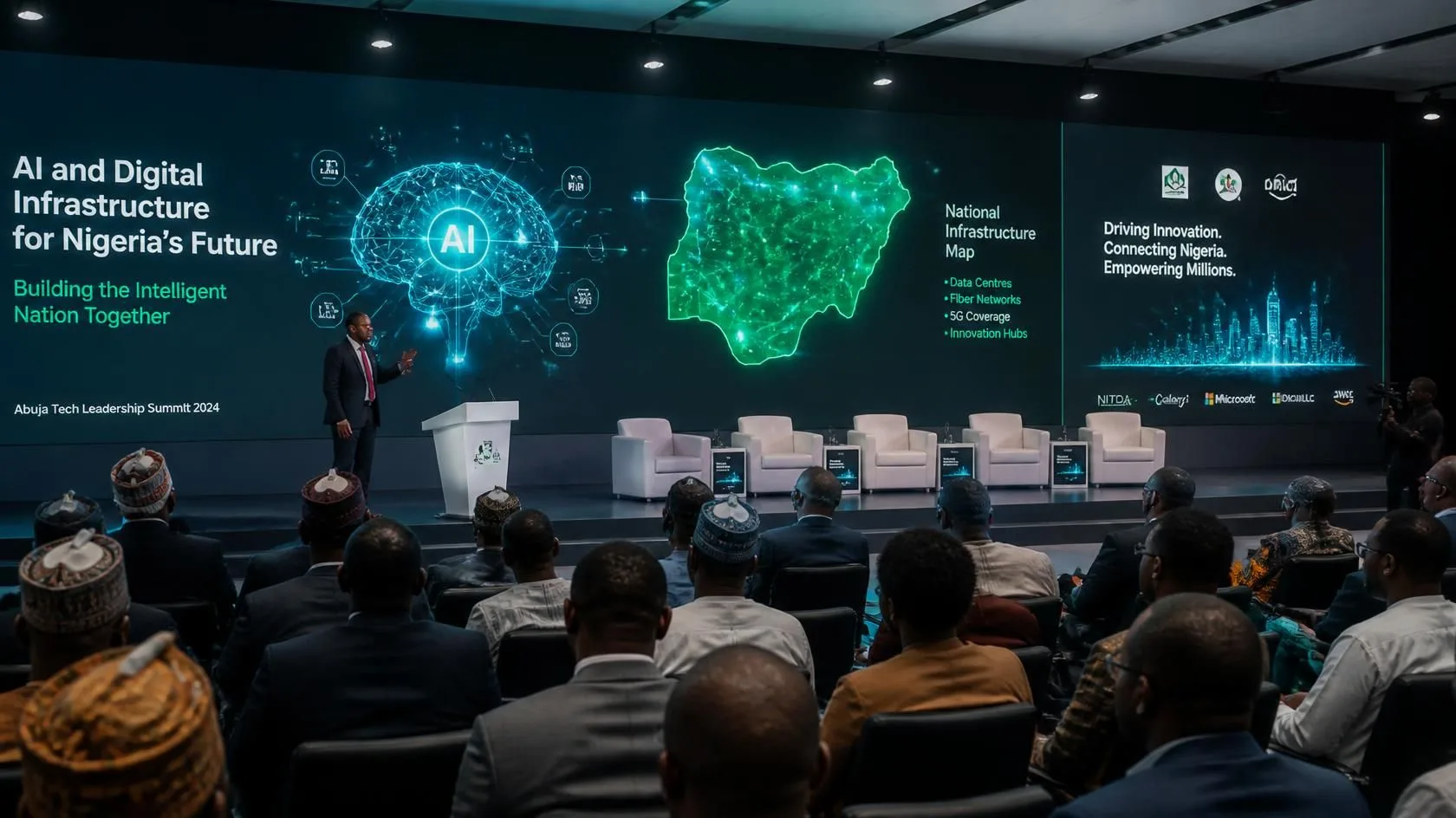
The biggest technology gathering on the continent kicked off this morning in Abuja. When the doors opened for the Government Leadership & AI Summit at GITEX Nigeria 2026, the atmosphere felt different from previous years. The usual Silicon Valley talking points took a back seat. Instead, the focus shifted entirely to ownership, local data control, and digital sovereignty.
Running from August 31 through September 3 across Abuja and Lagos, the event brings together policymakers, global tech giants, and homegrown founders. The core question dominating early sessions is straightforward: can Nigeria build an intelligent economy without outsourcing its digital brain?
From sovereign AI and digital public infrastructure to data governance and cybersecurity, the agenda signals a clear shift in how African nations view technology adoption. Nigeria is no longer content being just a consumer market for foreign algorithms. The country wants to own the infrastructure that powers its future.
What Sovereign AI Actually Means for Nigeria
Sovereign AI is more than a policy buzzword. At its core, it means a nation has the domestic capacity to build, train, and deploy artificial intelligence using its own data, infrastructure, and cultural context.
For years, African businesses and public agencies have relied heavily on foundational models trained in North America, Europe, or Asia. Those systems are impressive, but they carry distinct blind spots. They frequently struggle with local nuances, indigenous languages, and specific regional market dynamics.
When a healthcare diagnostic model trained entirely on Western medical datasets operates in rural Northern Nigeria, accuracy drops. When a financial underwriting algorithm evaluates informal trade along the Lagos coast using traditional credit metrics, it fails to understand how local commerce works.
Developing sovereign artificial intelligence Nigeria can rely on solves two critical problems:
Cultural and linguistic alignment: Local Large Language Models (LLMs) trained on Hausa, Yoruba, Igbo, and Nigerian Pidgin ensure public services reach everyone, not just English speakers.
Data security and economic resilience: Keeping sensitive national data inside domestic borders protects intellectual property, financial records, and citizen privacy from external shifts.
Government leaders at the summit emphasized that true independence in 2026 requires technological autonomy. If foreign platforms control your foundational models, they control the rules of your digital economy.
Digital Public Infrastructure: The Backbone of Local Tech
AI cannot operate in a vacuum. It requires reliable computation, fast connectivity, and clean data pipelines. That is why digital infrastructure Nigeria is expanding forms the second major pillar of GITEX Nigeria 2026.
Federal agencies like the National Information Technology Development Agency (NITDA) and the Federal Ministry of Communications, Innovation, and Digital Economy (FMCIDE) have made foundational infrastructure a top priority. Discussions in Abuja highlighted how sovereign AI relies directly on robust digital public infrastructure (DPI).
Without secure identity management, interoperable payment systems, and local hosting capacity, advanced AI deployments remain pipe dreams. Nigeria has made steady progress on several fronts:
1. Unified Identity and Verification
A functioning digital economy demands verified identities. Expanding the National Identification Number (NIN) ecosystem gives startups and public institutions a reliable way to authenticate users, cut fraud, and deliver targeted welfare programs.
2. Domestic Cloud and Hosting Facilities
Training and deploying complex models requires serious data center capacity. Local data residency laws mean nothing if developers have nowhere nearby to host their workloads. Connecting these efforts to the broader Nigeria sovereign cloud initiative allows public agencies and enterprises to retain control over their mission-critical datasets.
3. Open Financial Rails
Nigeria's payment ecosystem is already among the most advanced in the developing world. Integrating machine learning into local payment rails helps financial institutions detect suspicious transactions in real time and expand credit access to underserved communities.
The Dual-City Format: Connecting Policy in Abuja to Commercial Energy in Lagos
GITEX Nigeria 2026 is structured around two powerhouse cities, reflecting the dual nature of the country's technology ecosystem.
The opening leg in Abuja centres heavily on regulation, public-private partnerships, national security, and cross-border tech policy. Government ministers, defense chiefs, and international delegates are debating the legal guardrails needed to govern synthetic media, algorithmic bias, and autonomous systems.
As the conference moves toward Lagos later this week, the tone will shift toward raw commercial execution. Lagos represents the engine room of African tech. In commercial hubs across Yaba, Victoria Island, and Ikeja, AI startups Nigeria is producing are applying automated tools to solve immediate operational bottlenecks.
We are seeing local founders apply machine learning to concrete problems:
Agricultural Logistics: Predicting crop yields, optimizing fertilizer distribution, and tracking grain storage across the Middle Belt.
Informal Retail: Helping micro-merchants forecast inventory needs and secure micro-loans based on daily transaction history.
Healthcare Logistics: Routing cold-chain medical supplies to primary healthcare centres facing power constraints.
This bridge between Abuja's regulatory framework and Lagos's commercial hustle is essential. Policies drafted in the capital only succeed if they empower developers building in commercial hubs.
Governance, Cybersecurity, and Data Protection
Building domestic AI capabilities brings heavy governance challenges. As systems automate more civic and commercial decisions, ethical oversight becomes a pressing necessity rather than an afterthought.
Data privacy took center stage during the morning panels on cybersecurity. With expanded AI adoption comes increased exposure to malicious threats, automated phishing, and large-scale data breaches. Speakers pointed out that Nigeria's data protection ecosystem must evolve rapidly to keep pace with algorithmic threats.
Regulators are addressing three core governance priorities:
Algorithmic Accountability: Ensuring automated systems used in banking, judicial bail assessments, and civil service recruitment operate transparently and without discrimination.
Defending Critical Infrastructure: Protecting power grids, telecommunication hubs, and government databases against state-sponsored and criminal cyber intrusions.
Intellectual Property Protection: Establishing clear rules regarding how local creative works, literature, and news content are used to train third-party models.
Building public trust is vital. If everyday citizens feel their personal data is exposed or weaponized, adoption rates will plummet.
Addressing the Talent and Computing Deficit
Ambitious policy papers often collide with operational reality. Nigeria faces two significant hurdles as it pushes into advanced AI development: compute availability and technical talent.
High-end graphic processing units (GPUs) and specialized AI chips remain expensive and scarce across the continent. Most local startups cannot afford the millions of dollars required to train massive foundational models from scratch.
To overcome this, public and private stakeholders are pursuing practical workarounds:
Fine-Tuning Open Models: Rather than training trillion-parameter models from zero, local developers are fine-tuning open-source models using rich, local datasets. This approach slashes compute costs while retaining high accuracy for regional use cases.
Aggressive Talent Development: Initiatives like the Federal Government's 3 Million Technical Talent (3MTT) programme are training thousands of software engineers and data specialists. Collaborations like the Meta and 3MTT AI academy partnership are already helping close the skills gap by providing specialized training in deep learning and machine learning engineering.
Retaining this talent remains an ongoing battle. Global firms regularly recruit top Nigerian software engineers for remote roles abroad. Creating well-funded local research labs and providing access to enterprise-grade infrastructure is the only way to keep top technical minds building for domestic needs.
What Comes Next for Nigeria's Tech Landscape?
GITEX Nigeria 2026 marks a decisive turning point in regional tech policy. The opening summit in Abuja made it evident that the conversation has matured beyond startup pitch competitions and surface-level fintech apps.
By placing sovereign AI, domestic infrastructure, and robust governance at the center of the agenda, Nigeria is laying the groundwork for sustainable digital autonomy. The country has the demographic numbers, the entrepreneurial hunger, and the technical talent.
The real test will unfold over the next 18 months. Success depends on converting the ambitious policy commitments made this week into physical server farms, accessible developer grants, reliable power grids, and clear, supportive regulation.
If Nigeria gets this right, it will not just safeguard its own digital sovereignty. It will establish the blueprint for how emerging economies across Africa harness artificial intelligence on their own terms.
Comments (0)
Keep exploring
Related posts
 Tech
Meta, 3MTT and RAIN Launch AI Academy in Nigeria
 Tech
OpenAI CEO Warns How AI Could Go 'Very Badly' For Humans
 Tech
FlashNarrative Launches AI Brand Intelligence Platform
 Tech