EFCC and ICPC Probe NFF Over Missing ₦12 Billion Fund
The EFCC and ICPC are investigating top NFF officials over the alleged mismanagement of a ₦12 billion Federal Government intervention fund meant for players.



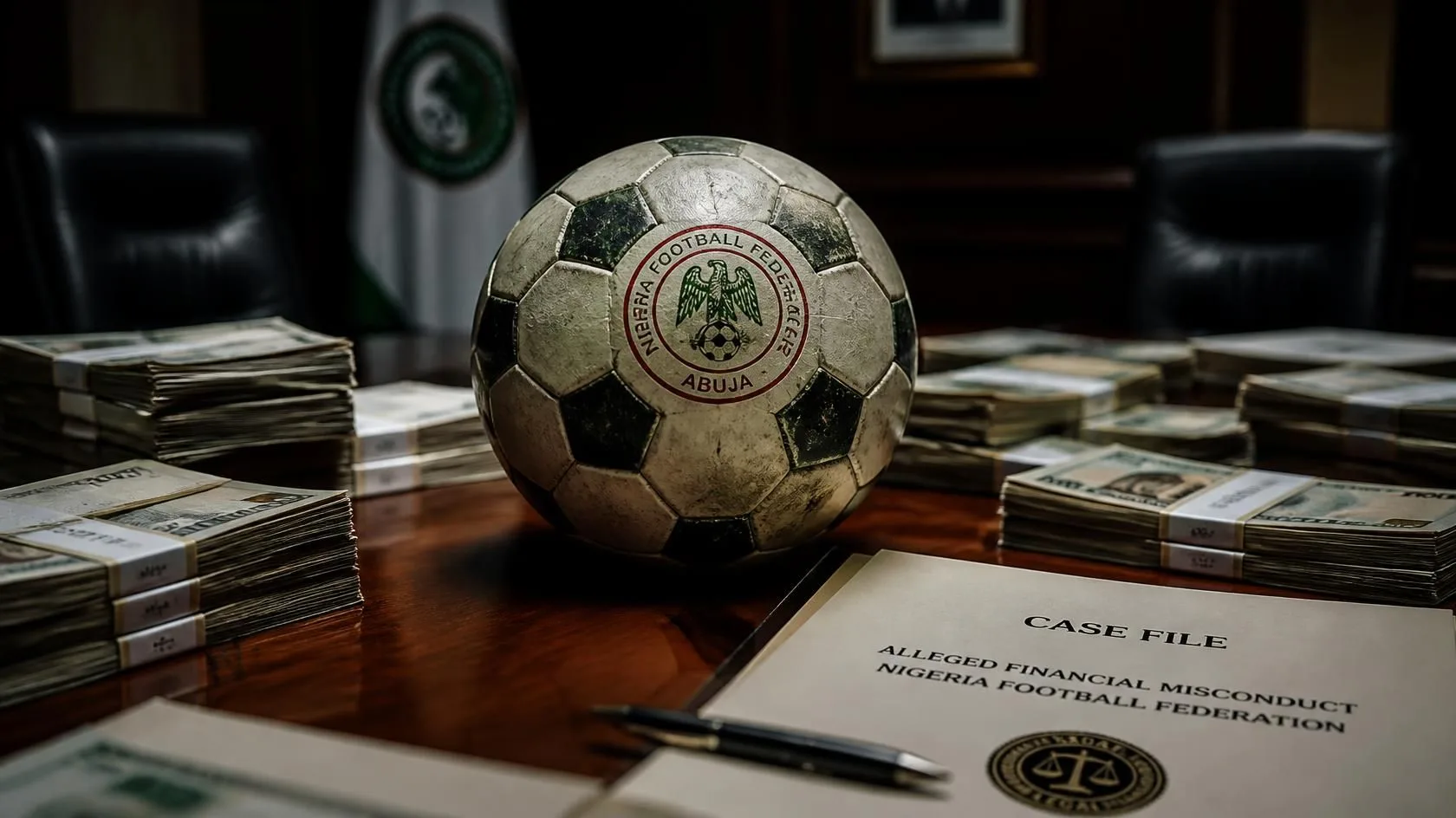
Nigerian football faces another major crisis today. This time, the drama unfolds entirely away from the pitch. Anti-graft agencies are asking tough questions about a massive financial bailout. The Economic and Financial Crimes Commission (EFCC) and the Independent Corrupt Practices and Other Related Offences Commission (ICPC) have summoned top officials of the Nigeria Football Federation (NFF). At the heart of this active probe is the alleged mismanagement of a ₦12 billion Federal Government intervention fund.
President Bola Tinubu approved this massive payout back in January 2024. The goal was incredibly simple. The government wanted to clear an embarrassing backlog of unpaid wages, bonuses, and allowances owed to national team players and coaches. Instead, a significant portion of the money seems to have vanished into an administrative black hole. Now, the EFCC and ICPC want answers.
The Origin of the Missing ₦12 Billion
The sheer size of this missing money is staggering. When you consider what massive public funds can actually buy in Nigeria, mismanaging ₦12 billion is a national embarrassment.
The NFF was supposed to pay off 15 months of outstanding salaries for coaches. They were also meant to settle accumulated bonuses for the Super Eagles, the Super Falcons, and the Under-20 squads. These are athletes who regularly put their bodies on the line for the country.
Things blew open recently due to a Freedom of Information (FOI) request. On August 7, 2026, the law firm Cromwell and Okeke demanded financial records. They wanted documents showing exactly how the NFF spent the ₦12 billion. The federation flatly refused to hand over the records.
On August 18, Onoja Joshua, writing on behalf of the NFF General Secretary, claimed the records were completely unavailable. He stated the documents were already sitting with the EFCC and ICPC as part of an ongoing criminal investigation.
Sources close to the investigation confirm that several top NFF officials have already faced interrogation. Investigators pulled them into their offices, took their written statements, and subsequently released them on administrative bail. The probe remains highly active today.
The Real Victims: Players and Coaches
While executives dodge questions in Abuja boardrooms, the players suffer the real consequences. The NFF has a notorious, long-standing reputation for ignoring its financial duties to athletes. You can trace this systemic failure through several recent public protests.
In November 2025, the Super Eagles flat-out refused to train. They boycotted a crucial practice session in Rabat, Morocco. This happened right before a vital 2026 World Cup playoff match. Their grievance centered on unpaid allowances stretching all the way back to 2019.
The younger developmental teams face the exact same disrespect. Members of the 2023 and 2025 Flying Eagles squads recently cried out over unpaid funds. They allege the NFF still owes them ₦1.5 billion in qualification bonuses and pre-tournament camp allowances.
These administrative failures directly impact on-field performance. The Super Eagles completely failed to qualify for the 2026 FIFA World Cup. The Super Falcons also missed out on a ticket to the 2027 FIFA Women's World Cup. We demand world-class results from athletes we simply refuse to pay.
Football fans across the country are exhausted by the constant boardroom drama. As the Premier League starts this weekend, Nigerian fans are sharply reminded of how a properly run football organization should operate. Clean finances directly lead to better football.
Timeline of the Financial Crisis
Let's break down exactly how we arrived at this current standoff.
Date | Key Event |
January 2024 | President Tinubu approves ₦12 billion to clear NFF debts. |
November 2025 | Super Eagles boycott training in Morocco over unpaid 2019 allowances. |
August 7, 2026 | Cromwell and Okeke file an FOI request demanding financial records. |
August 18, 2026 | NFF declines the FOI request, confirming ongoing EFCC and ICPC probes. |
The Political Fallout and Upcoming Elections
This corruption probe hits at the worst possible time for the current NFF leadership structure. NFF President Ibrahim Gusau actively wants a second term in office. The federation scheduled its highly anticipated elective congress for September 27 in Benin City. Now, his administration faces severe public and legal backlash.
Rumors are currently swirling about direct government intervention. Some reports suggest the National Sports Commission might step in, halt the upcoming elections, and install a normalization committee to run Nigerian football. The NFF board strongly denies these specific claims.
However, the optics of an ongoing EFCC investigation make any leadership transition incredibly messy. According to detailed reports from Punch Newspapers, the anti-graft agencies have not concluded their investigative work.
Why does the NFF rely so heavily on government bailouts in the first place? A properly managed football federation should easily generate its own revenue. Broadcasting rights, merchandise sales, and corporate sponsorships usually fund international football programs. But corporate sponsors run away from financial scandals. Brands refuse to associate with organizations that cannot pass a basic financial audit.
Because private money stays away, the NFF constantly runs back to the Federal Government. They demand bailouts to prevent national embarrassment. The ₦12 billion released in 2024 was supposed to be a massive reset button. It was a rare chance to wipe the slate clean and start treating the players with basic professional respect.
Nigerian football desperately needs a hard reset. Funneling billions of naira into a federation that cannot account for the money guarantees ongoing failure. Until the NFF cleans up its accounting practices, the national teams will continue to suffer on the global stage. The fans, and more importantly the players, deserve to know exactly where that ₦12 billion went.
Comments (0)
Keep exploring
Related posts
 Sports
FIFA and CAF Suspend Nigeria Football Elections After Resignations
 Sports
Man Utd Guilty on 114 Financial Charges? The Truth
 Sports
Super Eagles Rally for 2-1 Win Over Madagascar
 Sports